

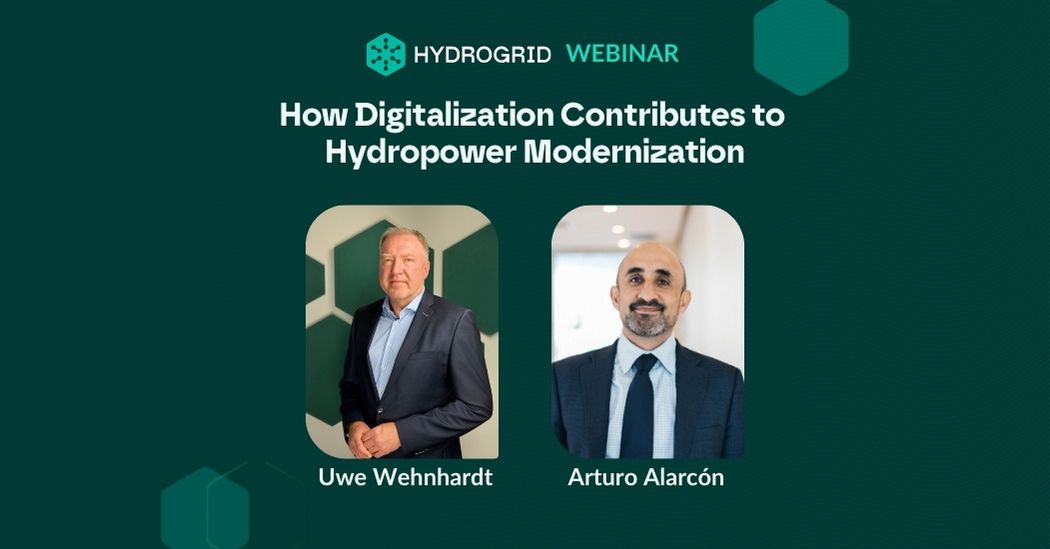
A conversation with Uwe Wehnhardt (former CEO, Voith Hydro) and Arturo Alarcon (Senior Energy Specialist, IDB)
The global hydropower fleet represents roughly 1,350 GW of installed capacity, and about 40% of it is more than 40 years old. That's not just a statistic. It's a signal that the world's largest source of renewable energy is running on aging infrastructure at a time when the demands placed on it are changing faster than ever.
We recently sat down with two experts to unpack what modernization really means in practice, and why digitalization isn't an optional add-on but a prerequisite for getting it right. Uwe Wehnhardt, former president and CEO of Voith Hydro and a senior advisor to HYDROGRID, brought decades of hands-on engineering and operational experience. Arturo Alarcon, a Senior Energy Specialist at the Inter-American Development Bank (IDB), offered the perspective of someone who evaluates and finances modernization projects across Latin America and the Caribbean. What follows are the key takeaways from our conversation, distilled into what we believe every asset owner and decision-maker should consider before, during, and after a modernization project.
Start With the Business Case: Modernization Adds Capacity Faster and Cheaper Than New Build
If you're weighing whether modernization is worth the investment, the fundamentals are hard to ignore. Modernizing existing assets adds capacity at a fraction of the cost and timeline of greenfield projects, with fewer environmental conflicts. Every year you extend the lifetime and energy output of a plant, the better its total footprint becomes.
But the case goes beyond economics. The operating environment has shifted: start-stop cycles are more frequent, ramping demands are steeper, and many plants are being pushed beyond their originally designed capacity. If your fleet includes assets over 30 years old, or assets operating in grids with growing wind and solar penetration, modernization is not a future agenda item. It's a current one.
Think Holistically: Don't Modernize in Pieces
One of the strongest points of agreement between both experts was this: modernization works best when you look at the entire hydropower complex, not just the turbine.
Taking a plant offline is expensive. A large facility can lose tens of millions in revenue during a single year of downtime. If you address only the powerhouse but ignore control systems, dam safety, or digitalization, you'll likely need to stop again years later for interventions that could have been bundled in.
Arturo's advice to anyone planning a project was direct: "Step back as far as you can go before you start modernization." That means evaluating not just the equipment, but the plant's interaction with the grid, the basin, adjacent systems like irrigation and flood control, and the future role of the asset in a changing power system.
For decision-makers, this is also a budgeting question. If you're already planning downtime, the marginal cost of including digital upgrades is far lower than scheduling a separate intervention later.
Make Digitalization Part of the Plan From Day One
Across Latin America, hydropower used to operate as baseload in relatively predictable hydro-thermal systems. Now, with rapid growth in wind and solar (some countries seeing 25-30% annual increases), hydropower's role is shifting toward complementing variable renewables. That means more variable output, more complex dispatch decisions, and a much greater need for real-time data and short-term forecasting.
From a financing perspective, this matters. Arturo was unequivocal: "Digitalization is definitely a green flag. You cannot manage efficiently a power plant in a changing power system without digital sensors, without digital systems that give you key inputs on how to operate."
For IDB, red flags in project proposals include cybersecurity gaps and cultural resistance to change. If a modernization plan focuses only on hardware and ignores how the team will adopt and work with new digital tools, that weakens the case.
The practical implication: if you're preparing a modernization proposal for internal approval or external financing, digitalization should be embedded in the scope, not treated as a separate line item to be cut if the budget gets tight.
Use the Data You Already Have
A recurring theme in our conversation was that hydropower plants are already data-rich environments. Automation systems have been collecting operational data for decades. What's changed is our ability to do something meaningful with it.
Uwe pointed to digital twins that allow operators to simulate scenarios without touching equipment or creating downtime, engineering tools that optimize turbine shapes and ramp-up curves, and predictive analytics that use metal stress and run-through signals to anticipate failures. Combined with tools like HYDROGRID's revenue optimization algorithm, operators can calculate optimal outage timing, turning maintenance planning from a calendar exercise into a data-driven decision.
If you're evaluating where to start, this is a practical entry point. You don't need a full equipment overhaul to begin capturing value. Arturo noted that even relatively new plants, 10 to 15 years old, can benefit significantly from digital interventions. Installing modern sensors has become cheaper and easier, and the insights they provide into plant condition, maintenance needs, and operational performance can deliver returns quickly, without long shutdowns.
Prepare Your People, Not Just Your Plant
Both experts were candid about the human side of implementation. The hydropower industry is conservative, and rightly so: it's critical infrastructure. But that conservatism can slow digital adoption if not managed carefully.
Uwe described three groups that typically emerge during any transformation: a curious group eager to learn, a resistant group that sees change as a threat, and a middle group that needs early wins before committing. His advice: invest in training, communication, and quick successes that demonstrate tangible value. Turn skeptics into what he called "champions."
He also flagged what's sometimes called the "Silver Tsunami," a wave of highly experienced professionals nearing retirement. "Many highly experienced and well-trained people are leaving our hydro system in the next years," he warned. But he also saw opportunity: digitalization and AI can help capture institutional knowledge before it's lost. If your workforce skews older, this is a reason to accelerate your digital roadmap, not delay it.
On cybersecurity, both speakers were emphatic. Any digital solution applied to critical infrastructure must meet the highest data security standards. Choosing partners who understand both the technology and the sensitivity of the environment is non-negotiable.
The Bottom Line: You Don't Need to Wait
If there's one message we took away from this conversation, it's that the barrier to entry is lower than most operators assume. Digitalization as a standalone intervention can improve efficiency, reduce equipment wear, strengthen maintenance planning, and improve coordination with the broader power system.
Whether you're preparing a major modernization, evaluating a project already underway, or simply looking for the first step: start with the data you have, look at the full picture, bring your people along, and choose partners who understand hydro.
The best time to start was yesterday. The second-best time is now.
Watch the full webinar to hear the complete conversation, including audience Q&A on workforce development, IDB financing mechanisms, and the regulatory frameworks that can make or break modernization projects: Watch the replay here →

